
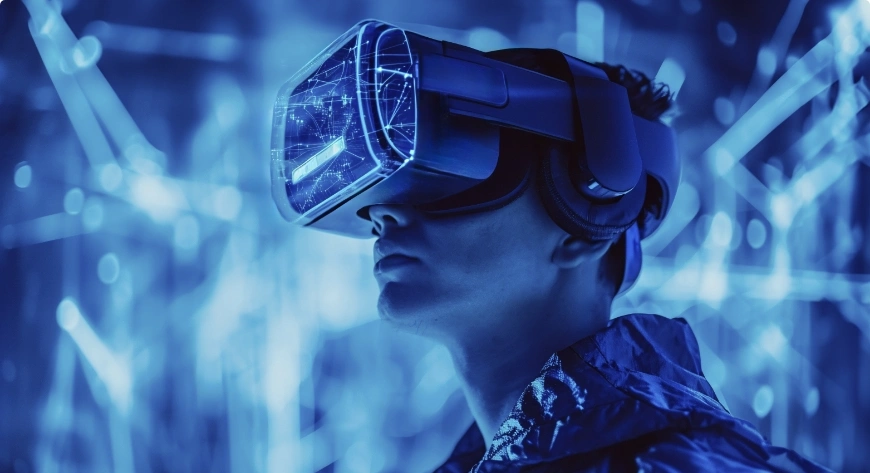
Not long ago, Augmented Reality (AR) and Virtual Reality (VR) were seen as futuristic experiments, more suited for gaming than for serious business. Today, that perception has changed dramatically. Retailers are using AR/VR to create immersive shopping experiences, while organizations are leveraging them for training programs that deliver hands-on learning without physical limitations. These use cases prove that AR/VR is no longer a novelty — it’s becoming a necessity.
“The true power of AR/VR isn’t in the technology itself, but in how it transforms everyday experiences into
something immersive, memorable, and impactful.”
Lessons from Retail
Retail has been one of the earliest industries to embrace AR/VR at scale. From virtual try-ons in fashion to
immersive showrooms for luxury goods, the technology is reshaping how customers interact with brands. The key lessons include:
- Experience drives loyalty: Customers remember immersive experiences more than ads or promotions.
- Convenience sells: Virtual product previews reduce hesitation and shorten buying cycles.
- Blended journeys matter: The best outcomes come when digital and in-store experiences complement each other, not compete.
Retailers in sectors like fashion, jewelry, and furniture are already showing how AR/VR can bridge the gap
between online browsing and physical interaction.
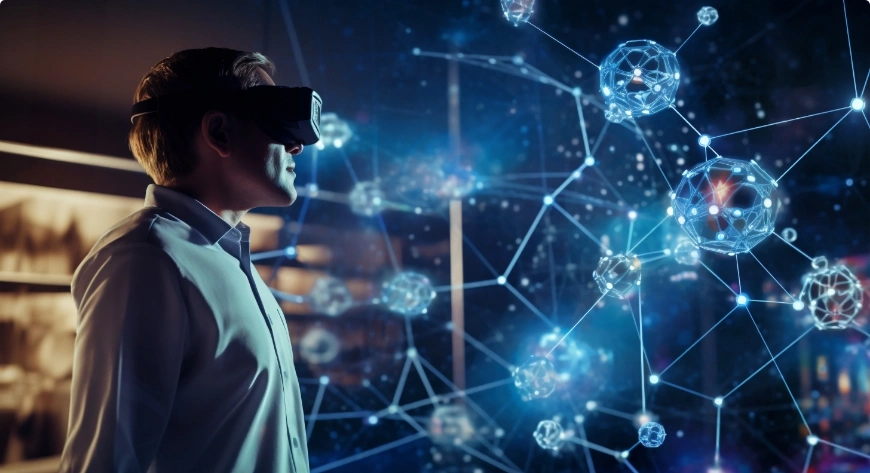
Lessons from Training
Training is another area where AR/VR is delivering measurable value. Instead of theory-heavy sessions,
learners can practice skills in safe, controlled environments. For industries like healthcare, aviation, and
manufacturing, this is a game-changer. Key takeaways include:
- Immersion improves retention: Interactive simulations boost memory and skill recall.
- Safety without compromise: Trainees can learn complex or dangerous tasks without real-world risks.
- Scalability matters: VR-based training can be deployed across geographies without requiring physical resources.
Organizations adopting AR/VR in training report faster learning curves, lower training costs, and better
preparedness for real-world tasks.
Bridging the Gap Between Potential and Practice
While AR/VR has proven benefits, many businesses still treat it as a one-off experiment. The real opportunity lies in embedding it into long-term strategies — whether that means designing customer journeys around immersive retail or building continuous training ecosystems that blend VR with traditional learning.
The Bottom Line
AR/VR is no longer a technology of the future; it’s a tool of the present. The lessons from retail and training show that success comes from focusing on human impact — creating experiences that engage, teach, and inspire. Organizations that recognize this shift early will not only gain a competitive edge but also redefine how people learn, shop, and interact in the digital age.